
The year 2014-15 could well go as one of long-pending financial sector reforms, expected to have a lasting impact.

NITI Aayog Member Rajiv Gauba has detailed an extensive deregulation agenda, moving India towards a 'permitted unless prohibited' principle to dismantle new forms of the Licence Raj and clear 'regulatory cholesterol' for businesses.

'Uncertainty level A in the morning, uncertainty level B in the afternoon. If I answer about tariff rates now, I'll be outdated by the evening.'

Transporters across Maharashtra have announced a statewide strike to protest against e-challans and other issues, potentially disrupting transport services including school buses and commercial vehicles.

India needs to increase the investment rate to 34-35 per cent from 31-32 per cent currently to achieve a growth rate of 7 per cent and above, said S Mahendra Dev, chairman, economic advisory council (EAC) to the Prime Minister, on Wednesday.

The Indian economy is growing at a robust pace, driven by strong domestic demand, low inflation, and the healthy balance sheets of banks, said a Reserve Bank report released on Wednesday.

The Supreme Court's ruling in the BPSL case exposes deep flaws in the IBC's institutional framework and raises concern about judicial overreach, notes Rajeswari Sengupta.

The Bangalore Chamber of Industry and Commerce (BCIC) has welcomed the Karnataka Budget 2026-27, highlighting its focus on economic growth, support for MSMEs, and infrastructure development. Industry leaders have expressed optimism about the budget's potential to boost manufacturing, create jobs, and drive innovation in the state.

The Union Budget for 2026-27, presented by Finance Minister (FM) Nirmala Sitharaman on Sunday, which was a first, had an excellent domestic macro backdrop. According to the first advance estimates, gross domestic product (GDP) in constant prices is projected to grow 7.4 per cent in the current financial year, against 6.5 per cent in 2024-25.

'The directives to enhance last-mile funding, consider revival funds, and systemic reforms across the sector are expected to revive stalled projects, improve accountability, and accelerate the delivery of affordable and mid-income housing.'
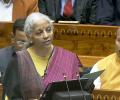
Budget 2026 sticks to fiscal discipline, shuns populist measures despite five key state elections coming up, but ends up rattling stock markets with a higher transaction tax on derivatives trading.

'Credit growth in India remains in double digits, even though corporate borrowing is subdued.' 'Corporate credit is weak because companies are cash-rich and cautious amid global uncertainty.'

India is growing fast, but to keep growing strong, the government must make more things at home, create jobs, and spend money wisely, suggests Rajiv Memani, regional managing partner, Africa-India Region, EY.

India Inc on Sunday hailed the Union Budget 2026-27 as a 'structural shift' in the country's technology landscape, noting that the government is moving beyond fragmented pilots to build foundational layers where AI serves as a 'horizontal enabler' for the entire economy.

'Given that India underperformed emerging markets by 28 per cent in 2025, the worst performance in over 30 years, the timing of the sharp STT hike could have been better.'

Since items in the 12% category account for only about 5% of total GST, the additional boost to consumption may not be significant, points out M Govinda Rao.
'This Budget has a one-year agenda, which you can call the sprint, and the marathon is towards Viksit Bharat.'

Three laws passed in Parliament could boost central revenues, reshape GST cess flows, shift MGNREGA costs to states and create new budget headroom ahead of the 2026-2027 Union Budget, points out A K Bhattacharya.

The Comptroller and Auditor General of India (CAG) has launched an integrated audit across 32 states and Union Territories to assess the ease of doing business for the micro, small and medium enterprise (MSME) sector.
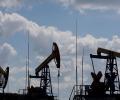
The government has no say in where the country's refiners source oil from because these are commercial transactions.
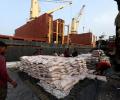
The government on Wednesday approved two schemes worth Rs 45,000 crore to help exporters tide over the impact of high tariffs imposed by the US on Indian shipments.

Officials said the government is keen to conform to the convention of the Union Budget for 2026-2027 being presented on February 1 despite it falling on a Sunday in 2026.

The Trump trade shock is a chance to push long-overdue reforms, rather than tinker with tariffs to appease the US, suggests M Govinda Rao.
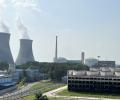
Government sources said amendments were being considered to the Atomic Energy Act to allow private sector participation and the Civil Liability for Nuclear Damage Act to limit the liability on suppliers of equipment to build atomic energy plants.

Opening up the corner office is fine, but will the government be able to attract talent without giving a market-rate salary?, asks Tamal Bandyopadhyay.
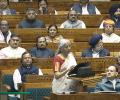
The fiscal deficit for FY25 has been pegged at 4.8 per cent of GDP and at 4.4 per cent for FY26, Finance Minister Nirmala Sitharaman said on Saturday. Presenting the Budget 2025-26, she said net market borrowings are estimated at Rs 11.54 lakh crore for next fiscal year.

India's market regulator is moving ahead to include real estate investment trusts (Reits) in benchmark indices in a phased manner, Sebi chief Tuhin Kanta Pandey said, while asserting that the regulator was working to strengthen the link between infrastructure building and the markets.
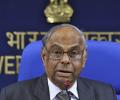
It is time for the three finance ministers of the 1990s to reveal the real hero, says T C A Srinavasa-Raghavan.

New-generation private sector banks such as ICICI, HDFC, Axis, Kotak etcetera owe their existence to the recommendations of the first Narasimham Committee.
The right policy response to global price increases is not straightforward. The draft report is wide-ranging in its scope, and it attempts to provide a coherent, integrated view of financial sector reforms that would equip India's financial sector to support growth, widen financial access and maintain stability over the next decades. The report is being released for public discussion at a critical juncture in both the domestic and global economy.

'Spend, but create assets, spend but make sure that people benefit from it.' 'This has been a beautiful guiding principle. And I think as a finance minister I owe so much to the prime minister for keeping this path clear before us.'
Facing criticism from the government over the central bank prioritising inflation over growth, the new RBI Governor Sanjay Malhotra on Monday said that prospects of the Indian economy are expected to improve on the back of high consumer and business confidence in 2025. "As we strive to preserve financial stability to support a higher growth path for the Indian economy, our focus remains steadfast on maintaining stability of financial institutions and, more broadly, systemic stability," Malhotra said in foreword to the Financial Stability Report.
The Reserve Bank of India is in favour of a cautious and gradual approach to financial sector reforms rather than a big-bang approach, as advocated by the Percy Mistry Committee report on making Mumbai an international financial centre.

'Currently, it takes between two and three years to formulate the request for proposal for procuring specific military equipment for the armed forces. It should not be this way.'

The Reserve Bank of India (RBI) brass, including its Governor Sanjay Malhotra, on Tuesday told a Parliamentary panel that it was "optimistic" about the impact of the US tariffs on the Indian economy and, in long-run, it could benefit the country due to dipping trade relations between the US and China.

Nine advisory committees to suggest sector-wise solutions.

'Challenge is basically near-term growth as the outlook has turned a bit adverse.'

While the capital spending is being maintained at 3.1 per cent of the GDP, a little more would have boosted economic growth even further, suggests Rajiv Memani.
 © 2026 Rediff.com - Advertise with us - Disclaimer - Privacy Policy - Sitemap - Feedback - About us - Terms of use - Grievances